Turnitin AI Detector: Trusted AI Checker For ChatGPT & Perplexity
We all know that technology changes fast.
At Social Think, we spend our days digging into data, social media strategy, and analytics to help businesses grow. We look at the numbers to find insights that drive real business results. Whether it is tracking a viral post or fixing a marketing plan, we know that data tells a story.
But right now, a different kind of data is making headlines in schools and universities. It is not about likes or shares. It is about academic integrity and the writing process.
We are talking about the Turnitin AI detector.
Since artificial intelligence tools like ChatGPT arrived, teachers have been worried. They want to know if a human wrote an essay or if a computer did it.
That is why Turnitin, a famous plagiarism checker, built a new tool to catch AI writing.
If you are a student, a teacher, or just someone who writes, this topic matters.
You might be searching for terms like Turnitin ai detector free or asking how to use Turnitin ai detection as a student. In this article, we will break it all down.
We will keep things simple so everyone can understand how this detection technology works and what it means for you.
If you are looking for help with your business data, check out Social Think. But for now, let’s look at the data behind AI detection.
What Is the Turnitin AI Detector and Why Was It Released?
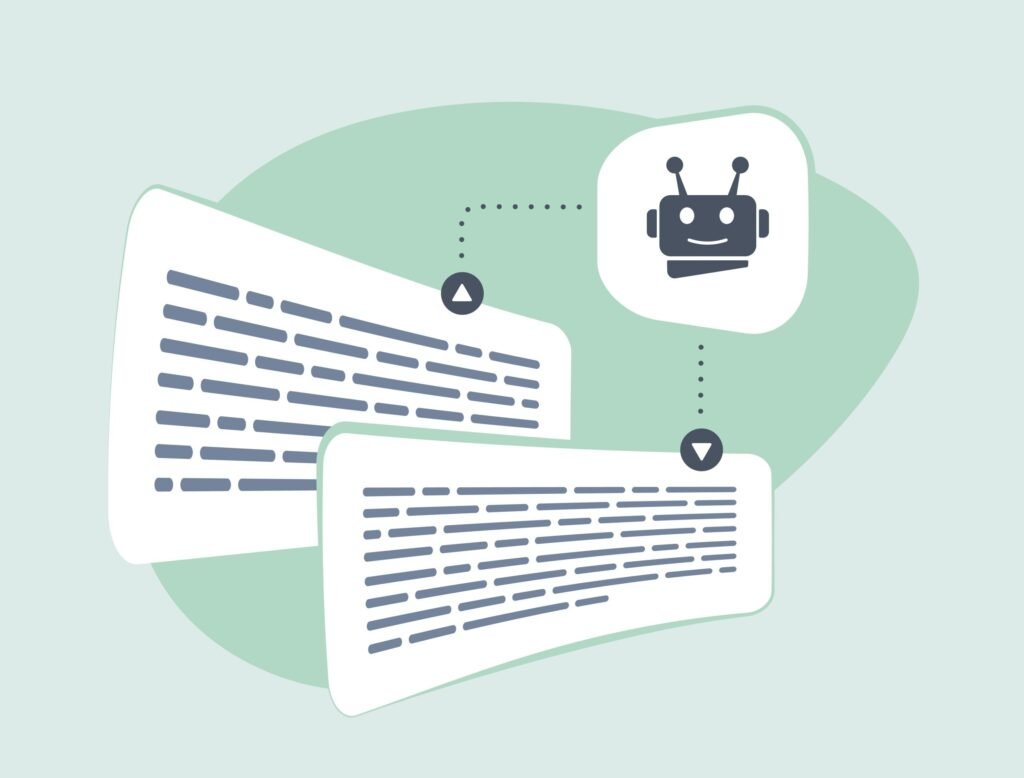
Schools have used Turnitin for a long time to check for plagiarism. Plagiarism is when you copy someone else’s work and say it is yours. But things have changed.
The Rise of ChatGPT and AI Writing in Academia
When generative AI hit the internet, everything shifted. Tools like ChatGPT could write whole essays in seconds. This was great for some things, but scary for schools. Teachers were seeing student submissions that were perfect but felt robotic.
The use of AI in schools grew fast. Students used large language models to do their homework. This created a problem for academic institutions. They needed a way to protect original work. They needed a way to spot AI content.
Because Turnitin was already the biggest name in plagiarism detection, they decided to act. They no longer just wanted to find copied text. They wanted to find AI text. So, they built a new detection feature right into their system.
How Does Turnitin Integrate AI Detection Into Feedback Studio?
Turnitin has a system called Feedback Studio. This is where teachers go to grade papers. When they released the AI detection feature, they kept it simple. They did not make a separate website. They put the AI writing indicator inside the screen that teachers already use.
Now, when a teacher looks at a paper, they see a similarity report (which checks for copied text) and a separate AI score. This detection score shows the percentage of the paper that might be AI-generated. It makes the content detection process seamless for the teacher.
If you are wondering about the Turnitin AI detector price, it is usually sold to schools, not individual users. Schools pay for a license so all their teachers can use the detection capabilities.
How Does the Turnitin AI Detector Work?
You might wonder how a computer knows if another computer wrote a sentence. It sounds like magic, but it is just math and machine learning.
The Technology Behind Pattern Recognition and Transformers
AI text generators like GPT-4 work by guessing the next word in a sentence.
If you type “The cat sat on the,” the AI guesses “mat.” It chooses the most likely word.
The Turnitin AI detector looks for this pattern.
It analyzes the student’s writing to see if it is too predictable. Human writing is messy. We use weird words. We change our sentence structure. We are unpredictable.
AI writing is usually very smooth and average.
The detection model Turnitin uses is trained to spot these “average” patterns. It looks at the text and asks, “Does this look like something a robot would write?“
Distinguishing Between AI-Generated and Human-Written Text
The software looks for two main things: perplexity and burstiness.
- Perplexity: This measures how surprised the model is by the words. If the AI detector is surprised by your word choices, it assumes a human wrote it. If the text is exactly what the model expects, it flags it as AI usage.
- Burstiness: Humans write with bursts. We write a long, complex sentence, then a short one. AI text is often very steady and boring.
So, the detection system breaks the document into segments. It gives each segment a score. Then it adds them up to give an AI detection score.
Is the Turnitin AI Detector Accurate?
This is the big question. Everyone wants to know if the Turnitin AI detector is right all the time. The short answer is no. No AI tool is perfect.
Understanding False Positives and False Negatives
A false positive happens when the tool says you used AI, but you actually wrote it yourself. This is a nightmare for students. It leads to false accusations. A false negative is when you use AI, but the tool says it is human content.
Turnitin claims its false positive rate is very low, less than 1%. This means out of 100 papers, maybe one gets flagged wrongly. However, when you have millions of student papers, that 1% means thousands of students could face trouble for original work.
Limitations With Mixed Sources and Paraphrased Content
The tool struggles when things get mixed up. If you write half the paper and use AI for the other half, the AI score might be confusing.
Also, paraphrasing tools (tools that rewrite sentences) can trick the detector sometimes.
But Turnitin is constantly updating its detection technology to catch these tricks. If a student uses a grammar checker heavily, it might smooth out the text so much that it starts to look like AI writing.
Official Accuracy Rates vs. Real-World User Experiences
Turnitin’s Chief Product Officer has said they strive for fairness. They want to protect academic integrity.
But many students and teachers tell a different story. There are reports of native English speakers getting flagged less often than students who are learning English. This is because non-native speakers often use simpler, more standard sentences—just like an AI.
This bias is a big problem in detection tools.
Interpreting the Results of the Turnitin AI Detector

Teachers need to be careful when they look at the detection results. A high score does not always mean the student cheated.
What Does the Percentage Score Actually Mean?
If the AI score says “30%,” it does not mean 30% of the paper is fake.
It means the detector is fairly sure that 30% of the text has patterns matching AI text. The score is an indicator, not a definitive proof. Turnitin puts a disclaimer saying the tool should not be the only proof used for academic misconduct.
The Difference Between Similarity Reports and AI Writing Scores
This confuses people.
- Similarity Report: This checks for instances of plagiarism. It looks for text that matches websites, books, or other student papers. It finds copy-paste issues.
- AI Writing Score: This checks for generative AI. It looks for text created by algorithms.
You can have 0% plagiarism but 100% AI detection. They are different checks.
How Teachers Should Handle High AI Detection Scores?
At Social Think, we believe in looking at data with context. Teachers should do the same.
If a student gets a high score, the teacher should not just give an “F.” They should look at the writing style. Does it match the student’s previous work? They should ask the student about the paper.
The AI writing indicator should be a flag to start a conversation, not a weapon to punish students.
Common Triggers For the Turnitin AI Detector

Sometimes, honest students get flagged. Why? Certain tools or writing habits can trigger the content detector.
Does Using Grammarly Or Spell Checkers Trigger Detection?
This is a common question: Does Grammarly usage cause a high score on the Turnitin AI detector?
The answer is: It can. If you use a simple spell checker, you are safe.
But if you use “generative” features that rewrite whole paragraphs for you, the text becomes more robotic. It loses your human voice.
Heavy use of a grammar checker can make your original work look like AI content.
The Impact of Translation Tools and AI Templates
Students who write in their native language and then use Google Translate to switch to English often get flagged. Translation tools pick the most “likely” word, just like ChatGPT does.
This makes the student work look like AI usage.
Using AI templates or outlines generated by AI can also be risky. Even if you fill in the blanks, the structure might trigger the detection model.
Best Practices For Navigating Turnitin AI Detection
Whether you are a student or a teacher, you need to know how to handle this new tool.
For Students: Proving Authorship and Maintaining Academic Integrity
If you want to avoid false accusations, you need to protect yourself.
- Use Google Docs: It has a “Version History.” This records every keystroke. If a teacher doubts you, you can show them the video of you typing the paper.
- Keep Drafts: Save your notes and rough drafts.
- Limit AI Tools: Be careful with text generators. If you use them for ideas, rewrite everything in your own words.
- Be Yourself: Don’t try to sound too fancy. Write in your own voice.
Searching for a Turnitin AI detector alternative to check your work before submitting can help give you peace of mind.
For Educators: Using the Tool As A Conversation Starter, Not Proof
Teachers need to trust their students. Use the detailed reports from Turnitin as a guide.
If the AI detection score is high, ask the student to explain their arguments. If they wrote it, they will know the topic well. Do not rely 100% on the detection system. Remember the false positive rate. You do not want to punish a hard-working student because of a software glitch.
Turnitin AI Detector Alternatives
Since you cannot buy Turnitin as a student, you might look for other options. There are many detection tools on the market.
- Winston AI: This is a popular paid tool. It claims high accuracy for ChatGPT and other models.
- Originality.ai: This is often used by web publishers to check blog posts and articles.
- GPTZero: One of the first tools made to catch AI text.
- Copyleaks: Another strong competitor in plagiarism checking and AI detection.
Some of these offer a free trial. If you are worried about your paper, you can run it through these tools. However, remember that no AI checker is the same as Turnitin.
Just because one tool says you are safe, it does not mean Turnitin will say the same.
Turnitin ai detector free versions usually do not exist officially. Be careful of scam sites claiming to have the official Turnitin tool.
FAQ’s:
Can the Turnitin AI Detector Identify Text Generated by ChatGPT and GPT-4?
Yes. Turnitin is trained to spot patterns from language models like GPT-3.5 and GPT-4. It looks for the specific way these text generators put words together.
Can Students See the Turnitin AI Detection Score?
Usually, no. The detection results are shown to the instructor. However, some schools allow teachers to share the reports with students. It depends on the settings your school chooses.
Does Paraphrasing Or Rewriting Text Bypass the Turnitin AI Detector?
Sometimes, but it is getting harder. Machine learning is getting smarter at spotting paraphrased content. Simply changing a few words (spinning) often results in bad writing that still looks like AI usage.
Does Grammarly Usage Cause A High Score on the Turnitin AI Detector?
It depends on how you use it. Standard grammar checks are fine.
But if you use Grammarly’s AI to rewrite whole sentences or paragraphs to fix “clarity,” it increases the risk of being flagged as AI writing.
Is the Turnitin AI Detector 100% Accurate?
No. There are false positives and false negatives. It is a probability tool, not a fact tool. Native English writers are less likely to be falsely flagged than non-native speakers.
Conclusion
The world of writing is changing. Artificial intelligence is here to stay. The Turnitin AI detector is just one response to this big shift. For students, the goal remains the same: learn, think, and write. Academic integrity is more than just passing a check; it is about doing the work.
For teachers, these tools are helpful, but they are not perfect. We must remember the human element. We must look at the student work holistically.
At Social Think, we believe in using technology to move forward, not to hold us back.
Whether you are analyzing social media metrics or checking an essay for AI content, critical thinking is your best tool. If you are a business looking to improve your digital presence with expert strategy and analytics, Social Think is here to help. We turn data into action.
Ready to elevate your business strategy? Contact Social Think today to get started.
We hope this guide helped you understand how to use Turnitin AI detector concepts and what they mean for your academic papers. Keep writing, keep thinking, and stay authentic.