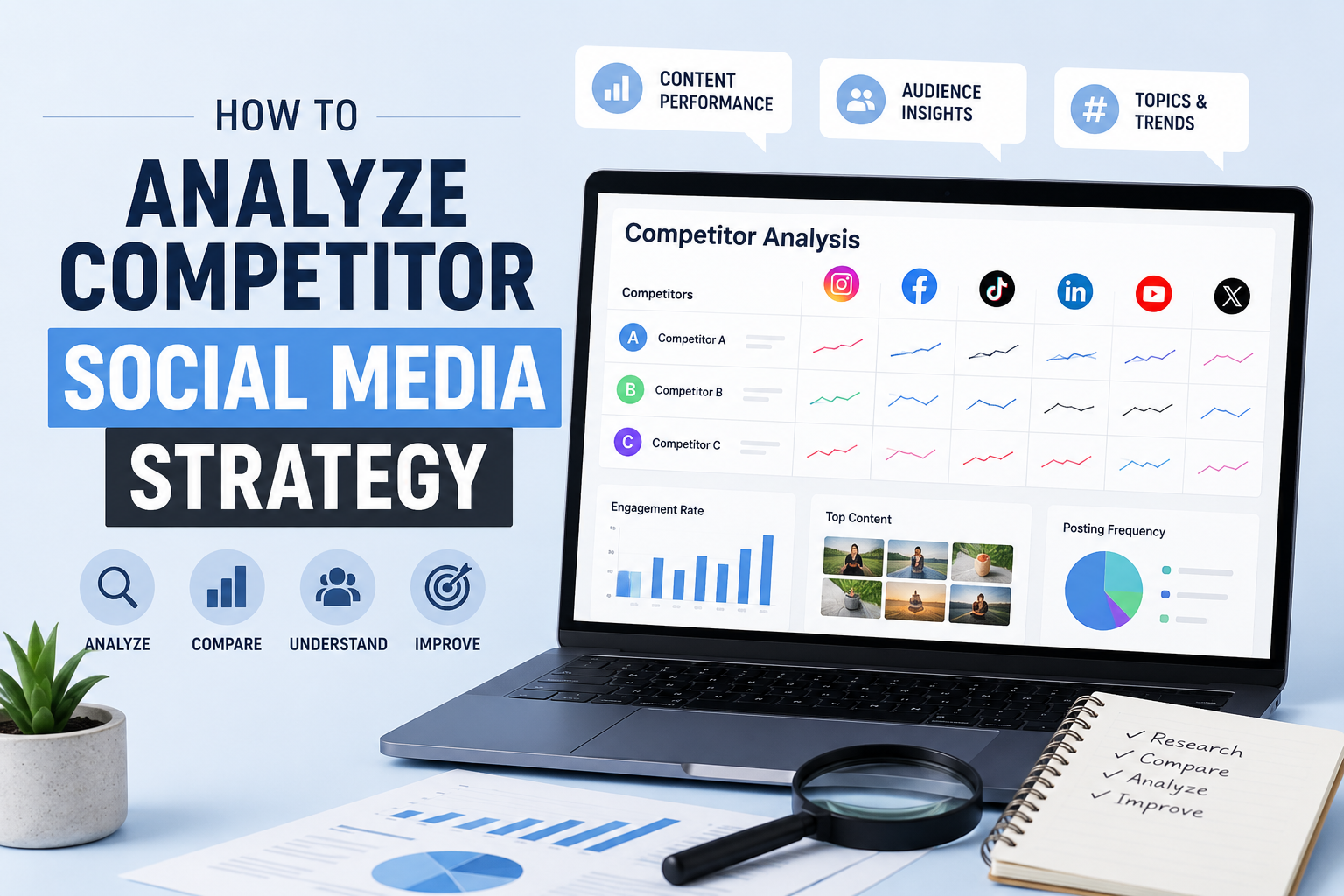
How to Analyze Competitor Social Media Strategy
Social Media Strategy becomes easier when you stop guessing what your audience wants and start paying attention to what they already engage with. That is why competitor research matters. Every day, businesses in your industry publish content, test ideas, and get immediate feedback from their audience. Most people see those posts and move on. Smart marketers look deeper. They study what gets ignored, what sparks discussion, and what people keep sharing. Those patterns often reveal opportunities that would take months to discover through trial and error alone.
A lot of people secretly spend time looking at competitor accounts online. They just do it badly.
They scroll for five minutes, see somebody getting huge engagement, feel mildly annoyed, then either:
- copy the content badly,
- overthink everything,
- or convince themselves the algorithm is unfair.
But honestly, good competitor social media analysis has nothing to do with jealousy or copying.
The smartest brands study competitors because it helps them understand:
- what audiences already care about,
- what content styles are working,
- and what people are completely ignoring.
That information matters a lot now because social media became ridiculously crowded.
The Goal Is Not Copying Competitors
This is honestly where most people get it wrong immediately.
The point of analyzing competitor social media strategy is not:
- stealing captions,
- copying reels,
- or recreating somebody else’s personality.
Because audiences notice copied content very quickly now. The real goal is understanding patterns.
Things like:
- what type of hooks stop scrolling,
- what topics create discussions,
- what tone feels natural,
- and what kind of content people emotionally react to. That is the useful part.
Most People Study The Wrong Metrics
Everybody obsesses over follower count first. Honestly, follower count means way less now than people think.
A page with:
- 20K followers,
- strong comments,
- saves,
- and actual audience trust
is usually much healthier than a huge page with dead engagement.
The things that matter more are:
- audience interaction,
- saves,
- shares,
- comment quality,
- and consistency.
Those numbers tell you whether people actually care about the content or are just scrolling past it.
Start By Finding Their Best-Performing Posts
This is honestly one of the easiest ways to understand a competitor’s strategy.
Go through their content and look for patterns in posts with:
- unusually high engagement,
- lots of comments,
- or heavy shares and saves.
After a while, patterns start becoming obvious.
Maybe their audience responds strongly to:
- storytelling,
- controversial opinions,
- short educational reels,
- emotional topics,
- or behind-the-scenes content.
That tells you a lot about what the audience already connects with emotionally.
Read The Comments Properly
Most businesses completely ignore this part. Which is honestly a huge mistake. The comment section tells you almost everything.
You can literally see:
- what audiences are confused about,
- what excites them,
- what frustrates them,
- and what kind of content makes people react emotionally.
Sometimes the comments are more valuable than the actual post itself. Because people reveal their real thoughts there very casually.
Pay Attention To Their Content Style
Not just the topic. The style.
For example:
- Are their videos fast-paced or slow?
- Do they sound educational or conversational?
- Are they polished or intentionally casual?
- Do they use humour heavily?
- Are they selling directly or building curiosity first?
Those small things shape audience perception way more than people realise.
And honestly, sometimes a content style performs well simply because it feels more human than everyone else in the niche.
The Best Competitor Analysis Usually Feels Boring
People expect some magical “growth hack.”
Honestly, most good competitor research is just consistent observation.
Watching:
- what gets repeated,
- what starts trends,
- what suddenly disappears,
- and how audiences react over time.
That slow observation matters much more than randomly chasing every viral trend online.
The Biggest Mistake Businesses Make
Trying to become a copy of another brand. That almost always fails eventually. Because audiences can feel when content lacks originality, regardless of the social media tools being used.
The smartest creators and businesses study competitors to understand:
- audience psychology,
- positioning,
- and content gaps.
Then they create something that still feels like them. That difference matters a lot long-term.
Look For What Competitors Are Missing
This part is honestly where the biggest opportunities usually are. Sometimes every creator in a niche keeps posting the same shallow content repeatedly.
That gap becomes your opportunity.
For example: if everybody explains things vaguely, deeper educational content stands out immediately.
Or if everybody sounds overly corporate, a social media service that focuses on conversational content can suddenly feel more refreshing. That is usually how strong positioning starts online.
The Best Tools for Competitor Social Media Analysis
A lot of creators and brands use tools like:
- Hootsuite
- Sprout Social
- Metricool
- Notion
- Google Sheets
to track:
- engagement,
- posting frequency,
- content performance,
- and trends.
But honestly, even manually paying close attention already teaches most people way more than they expect.
Final Thought
The reason competitor social media analysis matters so much now is because social media became extremely noisy. Random posting rarely works consistently anymore.
The brands and creators growing fastest are usually paying attention to:
- audience reactions,
- emotional patterns,
- content styles,
- and positioning strategies.
Not to copy competitors. Just to understand what people already care about so they can create better content around it.
Frequently Asked Questions
What is competitor social media analysis?
It is the process of studying competitor content, engagement, audience behaviour, and positioning strategies.
Why is competitor analysis important?
Because it helps businesses understand what audiences already respond to online.
What matters more than follower count?
Engagement, saves, shares, comments, and audience interaction usually matter far more.
What tools help analyze competitor social media strategy?
Popular tools include Hootsuite, Sprout Social, Metricool, Notion, and Google Sheets.
Should businesses copy competitor content?
No. The goal is understanding audience behaviour and positioning, not copying content directly.